Bounded autonomy
Agents operate within a declared brief, connector scope, and output contract.

Developers
Artisan AI is presented here as an agent-native prospecting approach: a compact skill that turns a sales question into structured research while preserving the points where context, consent, and judgment belong to people.
Origin
Traditional outbound work often fragments one decision across search tabs, contact databases, enrichment steps, prompt documents, spreadsheets, and engagement platforms. Each handoff loses context. The agent-native model begins with a different question: what if the operator could express the complete research intent once, receive an inspectable result, and keep control over every downstream action?
“The useful unit is not another seat. It is a well-scoped task with evidence, constraints, and an explicit review state.”
That principle shapes how the skill is installed and evaluated. Copying a command does not claim a successful installation. Running a package does not grant universal access. A draft is not a sent message. Clear states make the workflow easier for developers to inspect and safer for revenue teams to govern.
Agents operate within a declared brief, connector scope, and output contract.
Fit recommendations should expose the context that made them plausible.
Operators should be able to reject, revise, and rerun before external impact.
Builder practice
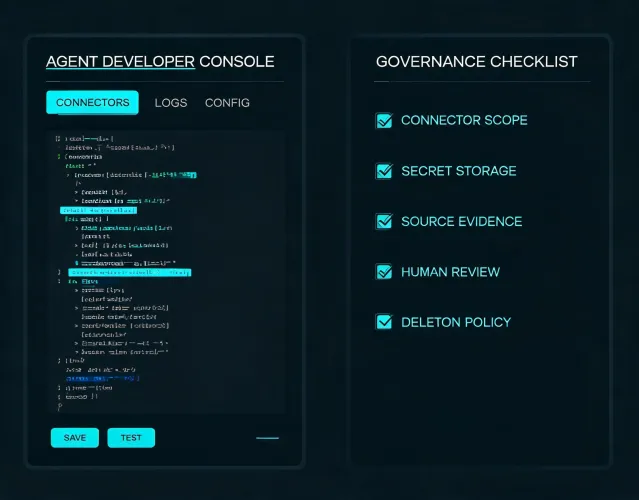
Start with one territory, a few hard exclusions, and an output schema that a teammate can inspect quickly. Document connector permissions, keep credentials out of prompts, and test with sample records before considering production data. For outreach, preserve human approval, regional requirements, suppression lists, and an intelligible opt-out path.
Developers can treat these controls as part of the product surface rather than compliance text hidden after deployment. The result is an automation architecture that earns broader scope through observed behavior.
Run locally, review requested access, and begin with a sample research brief.